
The Wildlife Photographer of the Year is the most prestigious nature photography competition in the world. Organized by the Natural History Museum of London, the competition selects the best submissions from photographers of all ages and nationalities to be displayed in a collective show. This show enlightens the soul and connects one to nature on a higher level. It is not only a collection of photographs and has an effect greater than that of an installation or film. Each photograph speaks for itself, and so do its depicted subjects, sending messages about climate change, pollution, survival, family, and urbanism without having to be explained in words. As one moves from one photo to the next, they are acquainted with distinct places on Earth, from the small world of insects to the vast expanse of mammals of grasslands and mountains. An intense array of emotions is felt as you face the photographs, brightly illuminated against the darkness of the walls and room, creating a meditative and reflective state which freezes time to invite one to think. In the “Behavior: Mammals” category, three photos summarize the complexity of animal behavior through fierce hunting, playful movement, and a mother’s priceless hug. Photos like these help us see how important it is for us to coexist with such beautiful creatures, and how lucky we are to see these sides of them.
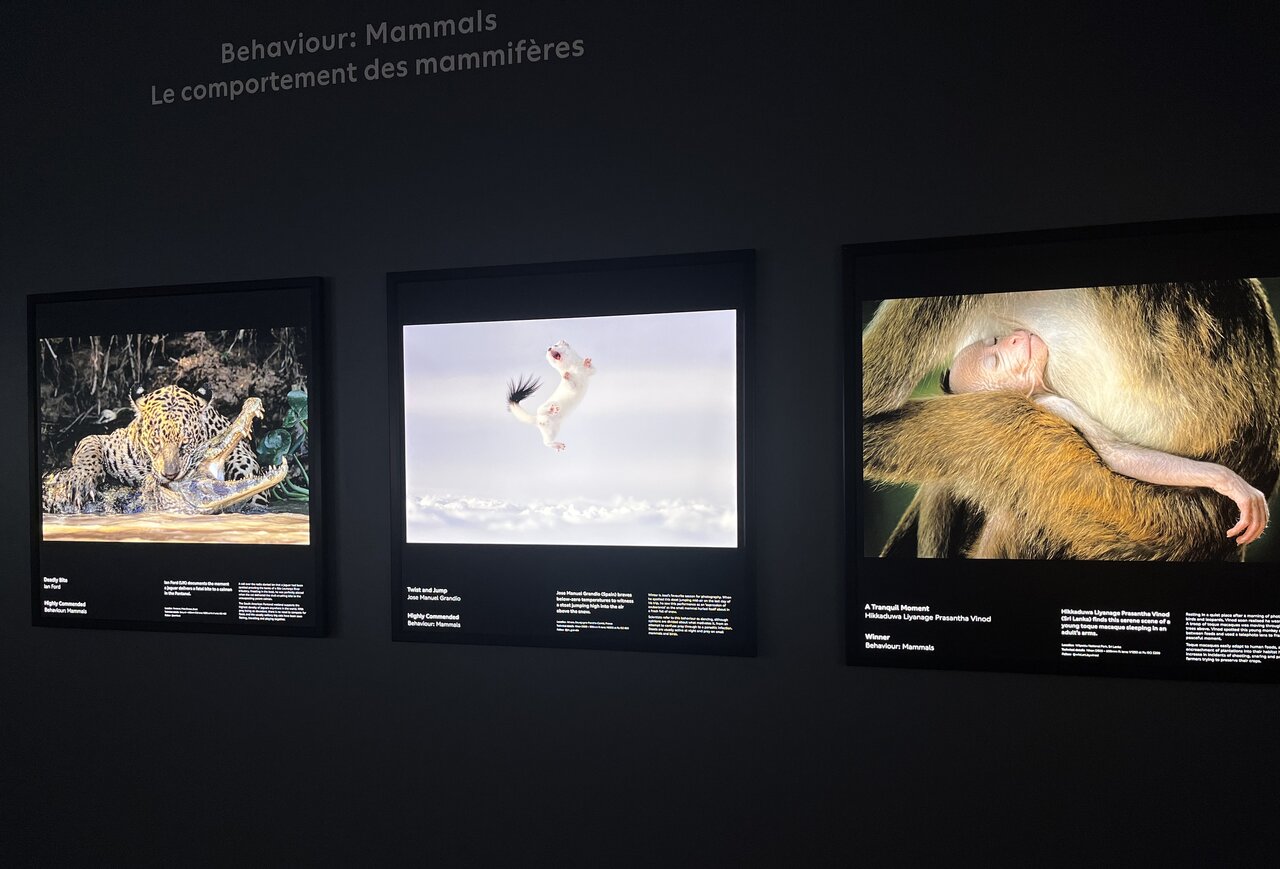
Installation view (L-R): Ian Ford (UK), Deadly Bite; Jose Manuel Grandio (Spain), Twist and Jump, both Highly Commended, Behaviour: Mammals and Hikkaduwa Liyanage Prasantha Vinod, A Tranquil Moment, Winner, Behaviour: Mammals
These scenes are contrasted by mournful photos like The Last Resting Place by Randy Robbins, which shows how those lively days of animals meet death. The sad emotions evoked by photos like this push one to think about the power of nature and the life cycle, and our own “power” in trying to control or exploit nature.
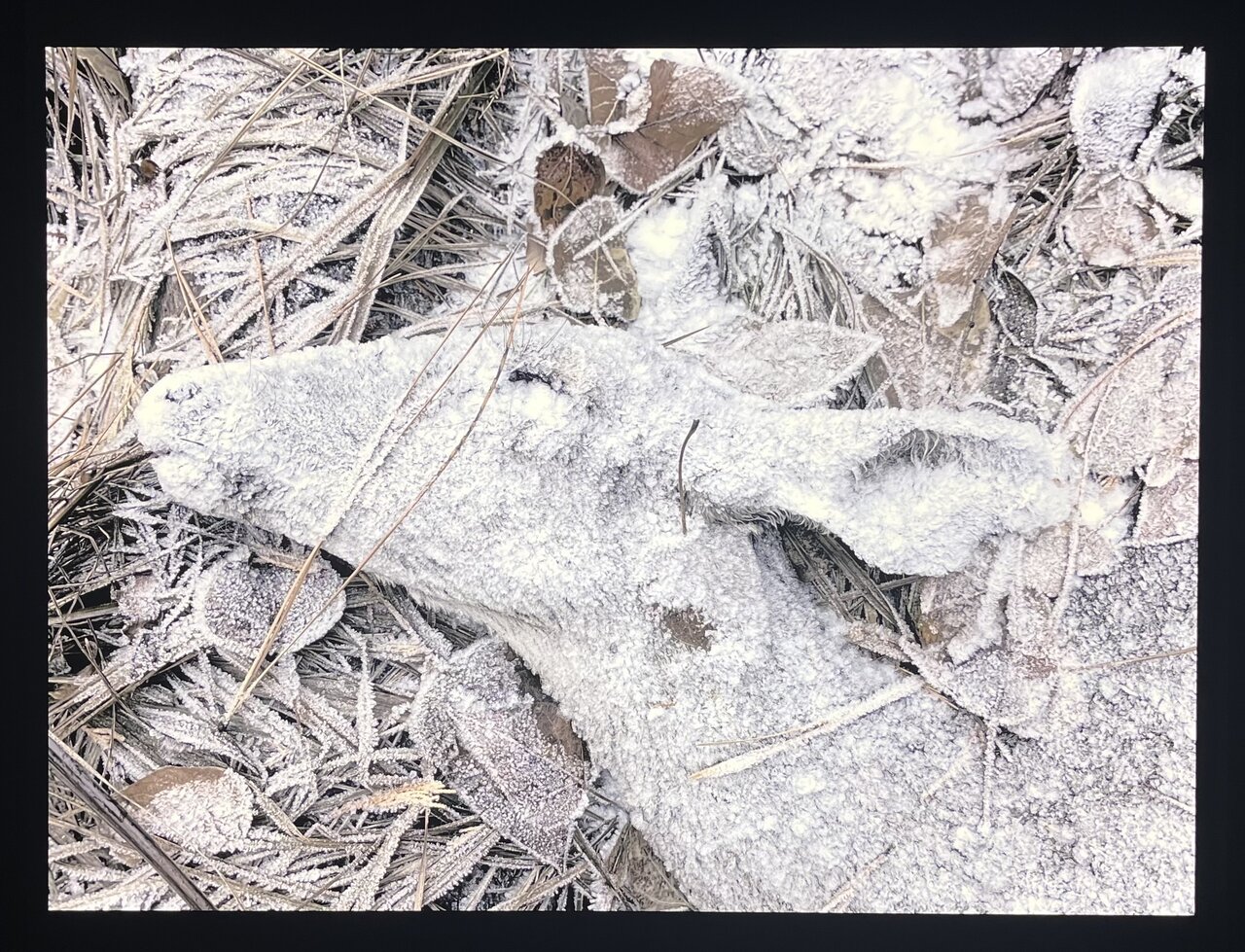
Randy Robbins (USA), The Last Resting Place, Highly Commended, Natural Artistry
We also see how important the Earth is for every species in photos like Elephant Slumber by Dhanu Paran, where a heartwarming family of elephants peacefully lays in a large field.
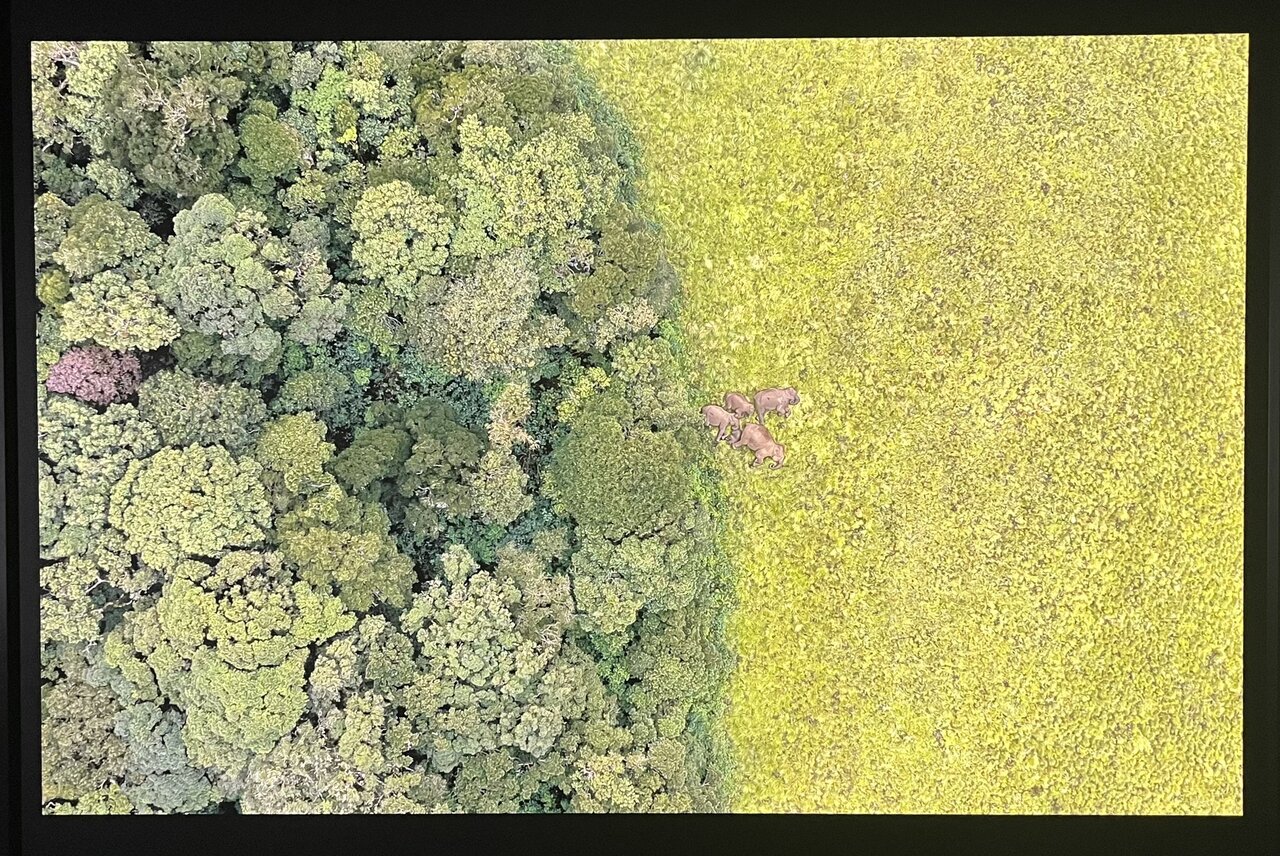
Dhanu Paran (India), Elephant Slumber, Animals in their Environment
Text written beneath photos provide more context, and the bottom left corner of the panel states the result/accomplishment of the photo in the competition. This feature provides an interesting opportunity for engagement as one can check whether their favourite photo won first place, or which category the depicted scene represents.
I was particularly impressed by the Young Photographers display category, showcasing some of the most astonishing work from experts as young as 7 years old. Occasionally, a red maple leaf sticker above displayed photos indicates work of Canadian photographers. Additionally, many different photography techniques are displayed, like underwater photography, aerial shots, macrophotography, and double exposure as seen in The Blue Bower of Keith Horton.
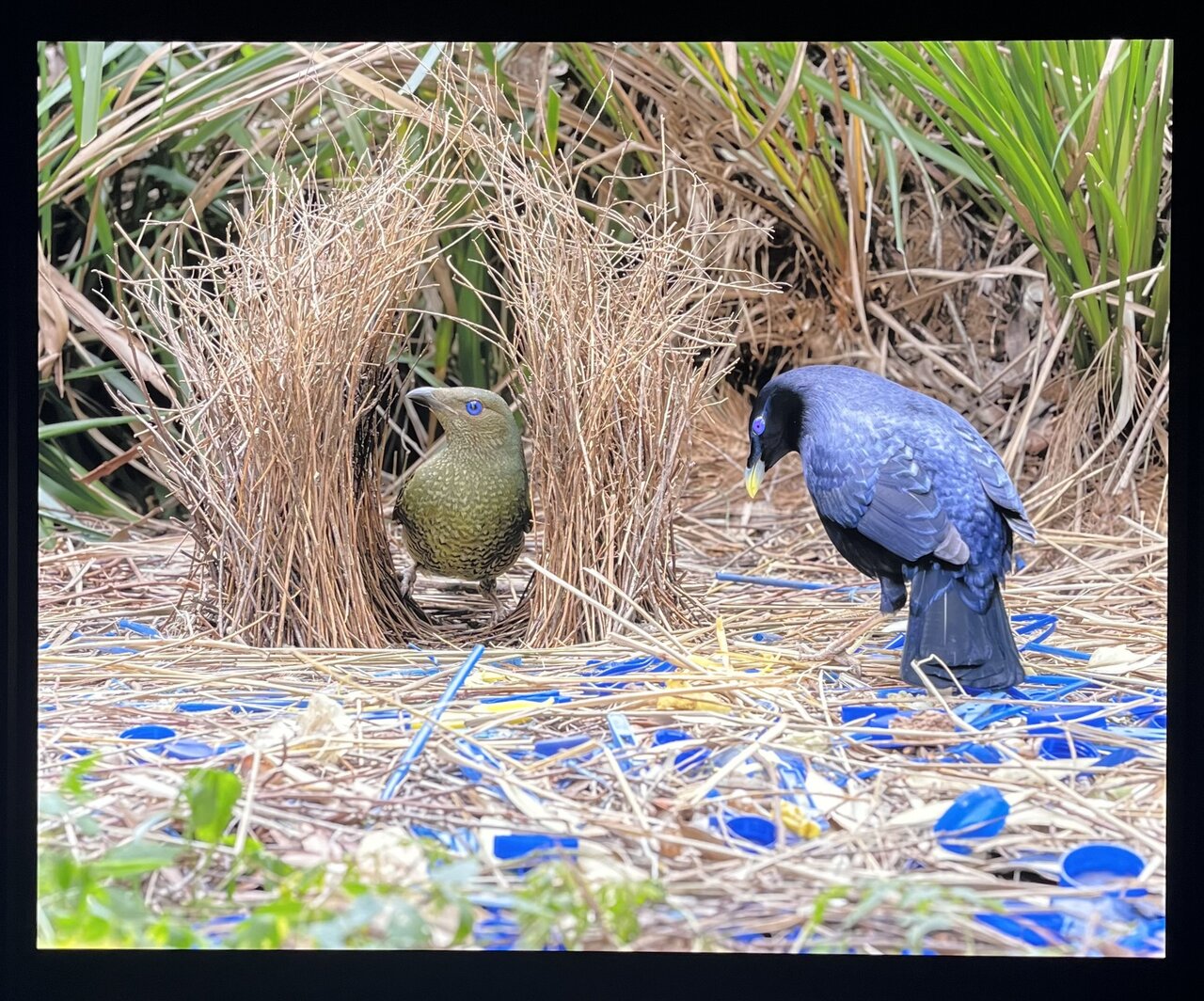
Keith Horton (Australia), The Blue Bower, Highly Commended, Behaviour: Birds
The displayed photographs reflect strong compositional strategies, aesthetic, and stunning colours which help create a memorable visual experience for the viewer. This exhibition will surely remain one the most emotional and inspiring experiences for me, and I will definitely be returning next year.
Text and photo: Nane Zadoorian
*Exhibition information: Wildlife Photographer of the Year 2024, till May 4, 2025, 100 Queen’s Park, Toronto. Museum hours: Tue – Sun 10 am – 5:30 pm.